Most of us choose a cold wash in one of two situations: when we’re in a hurry, we open the washing machine, throw in whatever needs washing, and select the programme that seems the safest; or when we’re about to wash a wool sweater, a favourite sweatshirt, or a coloured T-shirt we don’t want to find shrunk to a child’s size or faded into something that looks less vintage than simply worn out.
In those moments, we tend to think: better safe than sorry. Rather than risk damaging a garment, we wash it in cold water and avoid unpleasant surprises.
But cold washing is much more interesting than that. It’s not simply the “safe” programme; it’s a different way of caring for the clothes we value most, helping them last longer, reducing energy consumption, and gradually redefining the relationship between garment care and sustainability.
What are textile fibers, and why do they represent the true starting point of every fabric? Before becoming threads, fabrics, or garments, textile material begins as fibers. Understanding the origins, characteristics, and behaviors allows for a deep understanding of the entire production process, from spinning to finishing, to the most evolved treatment technologies.
Lyocell fabric is emerging as one of the most interesting fibers of recent years. It originates from a natural raw material but takes shape through an advanced technological process, successfully combining softness, durability, and breathability. It is no surprise, then, that it is becoming increasingly common in contemporary collections. But what exactly is it, and why is everyone talking about it?
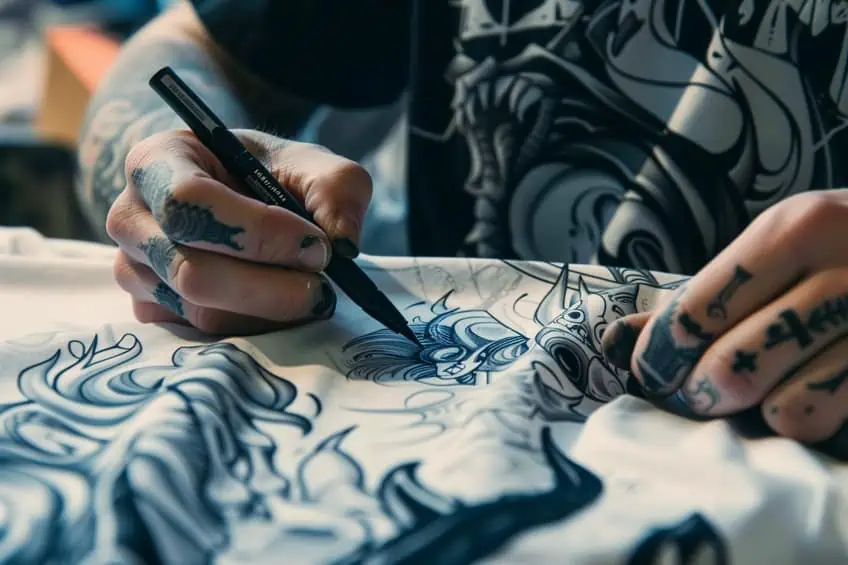
Designing a T-shirt may seem like a very simple task, but behind it hides a whole world of creativity, techniques, and process controls. Customizing a T-shirt can be a spontaneous, almost instinctive act, however, when the design becomes part of a collection, a Brand, or a structured production process, the way you choose to design a T-shirt changes radically.
The difference between a garment that works and one that disappoints lies not only in the design, but also in the relationship between graphics, fabric, and finishing. This is where concepts such as textile customization, surface design, T-shirt printing, and garment pattern design come into play.
Today, thinking of fashion merely as a way of dressing is no longer enough. Increasingly, what we wear also reflects our values, and the way garments are made.
In recent years, the concept of ethical fashion has become a more frequent topic of discussion regarding the future of the fashion industry. But beyond the most common definitions, what does it really mean when we talk about ethical fashion today?
More than a specific category, it is an approach that encompasses a garment’s entire life cycle and is gradually transforming the way fashions are designed, produced, and used. It is not an alternative model, but an evolutionary process involving the entire industry.
Discover how to shorten jeans without cutting them, preserving the original hem and the authenticity of the denim: practical, quick techniques that respect the garment.