
Dossier
How to create a design on a T-shirt
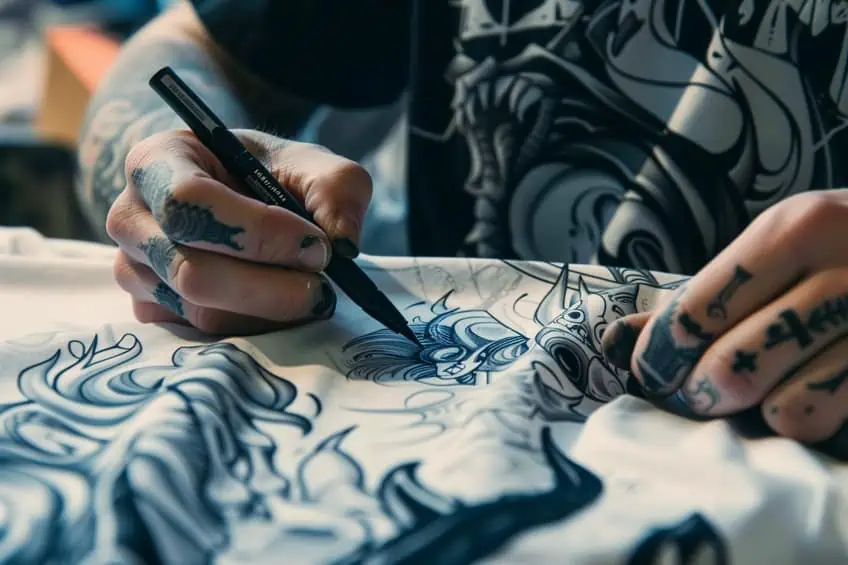
How to create a design on a T-shirt: first the choices, then the colors
Before even picking up a brush or opening a graphic file, stop for a moment and ask yourself a few essential questions. Is the fabric pure cotton, a blended jersey, or a technical fabric? Do you want the design to remain opaque and visible, or to almost “disappear” into the fabric? Will the garment need to withstand frequent washing, or is it intended for occasional use?
Understanding how to create a design on a T-shirt starts at this point. Because every technique reacts differently depending on the surface, and ignoring the nature of the fabric is the quickest way to compromise the result.
 © via acrylgiessen.com
Techniques for Drawing on a T-Shirt
There are many options when it comes to drawing on a T-shirt. The choice depends on the level of control you want and the context you’re working in.
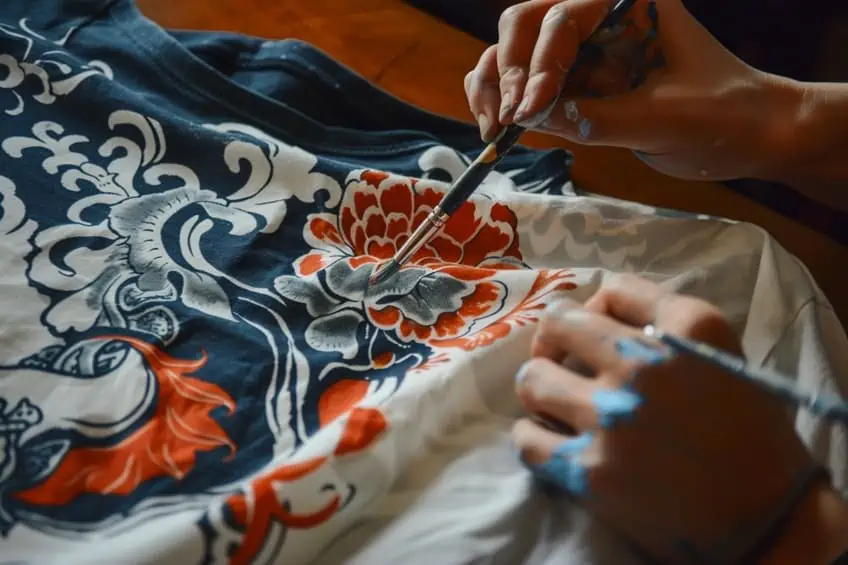
Hand-drawing with fabric paints is probably the simplest solution. You use special acrylics, permanent markers, or special inks, let them dry, and then set them with heat. This method is perfect for one-of-a-kind pieces and for a handcrafted look, but it requires some care: if the paint is too thick, the fabric can stiffen; if the color isn’t set properly, the design may lose intensity after just a few washes.


Stenciling represents a step toward repeatability. You create a stencil, mask off the areas that are to remain untouched, and work toward clean, solid fills. This is an effective solution for logos, lettering, and simple graphics. However, when details become complex, the masking process itself becomes a delicate task.
Screen printing is the industrial technique par excellence. The ink passes through a screen and is deposited on the fabric with great uniformity. If the process is well-calibrated, the result is stable, durable, and consistent across large print runs. However, it requires an initial investment and careful color planning.
Direct-to-garment digital printing, often referred to as DTG, allows you to reproduce complex images, gradients, and photographs without noticeable color limitations. This method is ideal for small runs and customization, but it is more delicate than it seems: the pre-treatment used on the garment and the quality of the base have a profound impact on the final result.
In all these cases, knowing how to create a design on a T-shirt means not only choosing the technique, but also understanding what happens before and after the ink is applied.


The Role of Treatments and Finishing
There comes a moment when the design ceases to be mere ink and becomes a surface. This is where the garment changes its nature: no longer a passive medium, but a living material that reacts, transforms, and tells a story.
When a project calls for complex patterns, effects of wear-and-tear, or other effects that seem to have emerged from the fabric rather than being applied to it, the laser is not merely a technology. It is a tool of language, capable of transforming a T-shirt print into a true surface design project.
With systems like Tonello’s THE Laser range, the marks are created through subtraction, modulation, and millimeter-precise control of the light on the fibers. There is no contact, no pressure: just is a dialogue between energy and matter. The result is not a design that rests on top the fabric, like an overprint that is foreign to the cloth, but a design that is an integral part of the garment.
And when the design phase takes center stage (when you want to simulate, correct, or experiment with patterns even before producing them) integrated solutions like THE Laser 2.0 allow you to move from concept to surface with literally stunning results.
In this scenario, understanding how to create a design on a T-shirt means expanding the very definition of design. It’s not just adding color, but sculpting light, modulating tone, creating depth. The marks do not merely decorate: they build identity.


How to Transfer a Design onto a T-Shirt Correctly
If you’re starting from a digital illustration, the adaptation phase is crucial. The file must have sufficient resolution, must have been prepared in the correct color profile, and must have been tested on an actual sample. A digital mock-up helps, but it cannot replace a physical test.
Many errors arise at this point, especially when the transition from digital graphics to actual printing on fabric is underestimated. Colors that look vibrant on a monitor may appear dull on fabric. Fine lines may lose definition. Without a preliminary test, the risk of discovering a problem once production has begun is very real.
Those who work in branding know that designing for a T-shirt isn’t just a matter of graphics, but also of quality control.
How to Print on a Dark T-Shirt
Black or colored T-shirts require extra care. A light base layer is often needed beneath the graphic to maintain color vibrancy. The inks must be opaque, and the pre-treatment must be precisely calibrated.
As an alternative, you can choose a more integrated approach, allowing the design to interact with the color of the garment through tone-on-tone effects or laser treatments that modify the surface without adding thickness. In this way, the graphic doesn’t appear “superimposed,” but rather appears to be part of the fabric itself.
Common Mistakes When Designing a T-Shirt
Even experienced designers can overlook fundamental aspects. Fabric shrinkage after the first wash can alter proportions and placement. The fiber composition affects color absorption. A low-resolution file compromises sharpness. In production, skipping wash tests exposes your product to complaints and returns, and is definitely a “no-no”.
Knowing how to create a design on a T-shirt means preventing these problems before they turn into costs.

Designing a T-shirt for a Brand
When a project involves a Brand, creativity must coexist with reproducibility. Every stage (from prototyping to sampling, from technical validation to finishing) must be carefully monitored.
The garment is not merely a graphic medium: it is an object that communicates both identity and personality. The choice of printing technique, any laser treatments, the final fabric softness, and the color retention after multiple washes are all elements that contribute to the perception of the brand.
In this sense, truly understanding how to create a design on a T-shirt means considering the process as a whole. The design is the beginning, but it’s the technology that allows it to last, evolve, and remain consistent over time.
Condividi l’articolo:


